
Somatic Support for Ketamine Assisted Therapy
Making space to listen, feel, and connect with what’s beneath the surface
Ketamine can quiet the usual noise and open access to sensation,
feeling, imagery, and new ways of experiencing ourselves.
The experience can deepen, expand, and be better integrated when we have a skilled, attuned companion by our side.
I support you and your body through the process.
What is Ketamine Assisted Bodywork?
Ketamine-assisted bodywork combines the altered state produced by ketamine with gentle, attuned somatic touch and body-based awareness.
Combined with bodywork, ketamine can open space for a direct experience of presence, curiosity, and embodied awareness. You may notice new perspectives, emotions, memories, or sensations as they arise, with the support of a steady, attuned presence alongside you.
Sessions are designed to support presence, curiosity, and embodied awareness rather than to direct or interpret your experience.
Why Ketamine Assisted Bodywork?
Deepening Embodiment
Develop a more nuanced awareness of sensations, emotions, and patterns held
in the body.
Letting Go
Support deep relaxation and the possibility of softening habitual patterns of muscular and nervous-system holding.
Exploring New Perspectives
Ketamine can create distance from familiar patterns, opening space for new ways of experiencing yourself and your life.
Every ketamine experience is different.
This work is not intended to diagnose or treat any particular condition, and individual experiences vary.
My role is to offer skilled, attuned somatic support while you explore deeper layers of experience.
I meet you where you are.
How It Works
1. Consultation
We schedule a free 30-minute phone call to answer questions and to determine if this is right for you.
2. Preparation
We begin with a 1 hour preparation session to get to know each other, explore your intentions, establish consent around touch, and prepare for the experience. This session is in person.
I do not provide or prescribe ketamine. Ketamine used during a session must be prescribed and managed by an independent licensed medical or mental-health provider.
If you are looking for a prescriber, reach out to me.
I can help connect you.
3. The Journey
Typically, a journey lasts for a total of 3-3.5 hours.
We spend the first 30 minutes arriving together, checking in, getting comfortable, and orienting to the space. You then take your prescribed ketamine according to your provider’s instructions.
As the experience unfolds, I stay closely attuned to you and offer gentle bodywork, somatic awareness, and relational support for roughly 2 hours. I may invite attention toward touch, breath, sensation, or movement, or simply offer a steady presence, responding to what emerges moment by moment.
You may move inward, become more relational or verbal, encounter emotions, images, or memories, experience shifts in perspective, or simply rest. I’ll help you stay oriented and connected to your experience without interpreting what it should mean or directing how it should unfold.
As the medicine begins to wear off, I’ll support you in slowly returning, reorienting to the space, and reflecting on what you experienced.
4. Integration
1-3 days after the journey, we meet again in person for a 1 hour integration session, where we slow down and explore what remains from the experience.
A somatic approach to integration can help you notice how insights, emotions, and shifts in perspective are reflected in the body—and explore how they might be carried into daily life.
Frequently Asked Questions
-
Ketamine is a dissociative anesthetic medication that has been used in medicine for decades, including as an anesthetic and for pain management. At lower, therapeutic doses, it can produce changes in perception, sensation, thought, and one's sense of self. Ketamine is also being used and studied as a treatment for a range of mental health conditions, including depression and anxiety.
In a therapeutic setting, these shifts in consciousness can sometimes create space to experience yourself, your emotions, and familiar patterns in new ways.
-
Item Ketamine affects everyone differently, and the experience can vary depending on the dose, setting, and person. You may feel deeply relaxed, physically heavy or light, or notice changes in your perception of time, space, sound, and your body. Some people experience vivid imagery, unusual sensations, or a dreamlike or expanded state of awareness. Others may feel more detached from their usual thoughts, emotions, or sense of identity.
You don't necessarily need to “do” anything with the experience. Sometimes there is a sense of moving inward, letting go of familiar ways of thinking, or encountering something that feels difficult to put into words. The experience can be gentle, profound, strange, emotional, or simply restful—and there is no single “right” way for it to feel.
-
No. Ketamine must be prescribed and managed by your own licensed medical or mental-health provider.
Reach out to me if you are looking for a prescriber. I can help connect you. -
Yes. This work is intended for people participating in a medically supervised ketamine treatment plan.
-
Yes. If you wish, coordination with your treatment team can be part of the process with your written permission.
-
No.
We may engage in dialogue, emotions might be expressed and processed, and we may engage in somatic relational work, however this is a somatic bodywork modality that complements, but does not replace, medical or psychotherapeutic care.
-
Not exactly. You remain fully clothed and actively engaged in your experience throughout the session.
The work may include elements of massage, touch, and gentle bodywork, but the intention is not to passively receive a treatment. Instead, we work together to support your awareness of what you’re sensing, feeling, and experiencing in your body.
I might offer to hold your ankles, spine, shoulder, or head to support a physiological shift. I might offer to hold your hand for relational support. I might gently rock your body to help you let go. At times I might sink with deeper pressure in your abdomen to support an emotional process, or I might offer some joint mobilization to support relaxation. I may simply sit by your side. We collaborate on the touch you receive, and you are always in charge. -
Somatic bodywork invites you to experience your body from the inside out. Rather than focusing only on symptoms, it brings attention to sensations, emotions, movement, breath, and other aspects of your present-moment experience.
Unlike conventional massage, it is often more participatory, although deep rest and stillness are welcome too.
Touch is always consensual and negotiated, and typically involves gentle holding of certain areas — commonly the feet, under the back, shoulders, head, and sometimes the chest and belly.
Occasionally I utilize manual techniques from shiatsu or myofascial release when appropriate.
-
Touch is never required. You can choose to receive little or no touch, and you can change your mind at any point during a session. We work collaboratively with whatever feels supportive and appropriate for you.
-
My work draws from training in somatic movement, craniosacral therapy, relational somatic healing, and hakomi mindfulness somatic therapy.
I have been practicing somatic bodywork and somatic movement education for over ten years, and completed specialized Ketamine Assisted Therapy training through Sage Integrative Health.
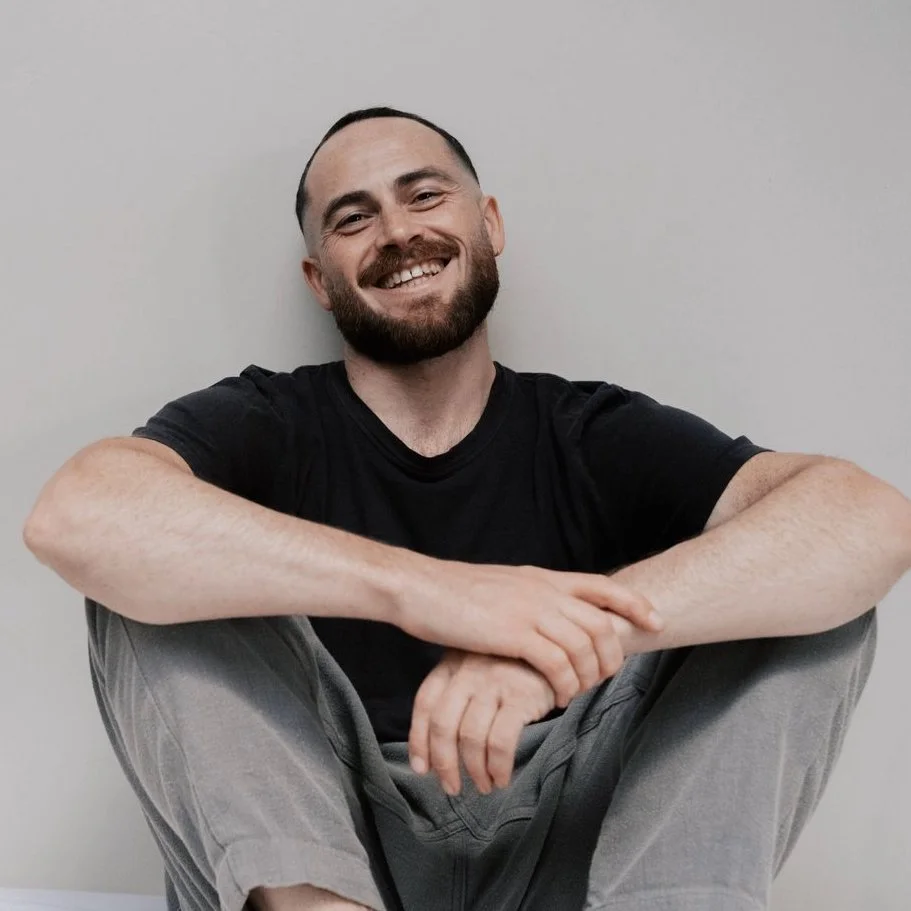
About Natan
My work brings together many years of study and practice in somatic movement, bodywork, touch, and embodied awareness.
Experience
I am a Registered Somatic Movement Educator/Therapist (RSME/T), Licensed Massage Therapist (LMT), and a Certified Craniosacral Therapist (RCST). I also hold a Master’s degree in Education, and have been teaching and facilitating embodied practices for over ten years. My approach has been shaped by training in Ketamine Assisted Therapy through Sage Integrative Health, as well as Hakomi Mindful Somatic Psychotherapy, Innate Somatic Intelligence Trauma Therapy Approach (ISITTA), Relational Somatic Healing, the Tamalpa Life/Art Process in Expressive Arts Therapy, and other approaches to somatic and experiential practice such as Body/Mind Centering, yoga, and meditation. These trainings have given me a broad range of ways to listen to the body, trust its innate wisdom, and support people in strengthening the mind-body connection.
Philosophy
I don't see the body as something that needs to be fixed or interpreted from the outside. Rather, I’m interested in helping people to notice what is already happening—to slow down, listen deeply, and come into relationship with what the body is communicating.
My role is not to direct your experience or tell you what something means. Especially in the context of ketamine, I see myself as a grounded, attentive companion: someone who can help you feel supported and oriented while leaving room for your own experience to unfold.
Book a Consultation
We’ll connect, I’ll answer any questions, and we’ll see if it feels like a good fit — at no charge.